Introduction
Welcome to Part 3 of our series on marketing campaign preparation, I’ll reveal the crucial crucial aspect of understanding and tracking changes in customer buying patterns.
If you missed the first two parts, I previously wrote about identifying your target audience and understanding what they are buying.
Identifying and tracking customer buying patterns is crucial for companies for several reasons:
- Informed Marketing Strategies: Understanding customer buying patterns allows companies to tailor their marketing strategies effectively. By knowing what products or services customers are interested in, companies can create targeted and compelling campaigns that resonate with their audience. We buy from companies who send us campaigns with images showing the items/services we are interested in. Amazon and Target have been proving that for years!
- Personalized Customer Experiences: Tracking buying patterns enables companies to provide personalized experiences for their customers. Whether through personalized recommendations or targeted promotions, companies can enhance customer satisfaction and loyalty by catering to individual preferences not an homogenous group.
- Optimized Inventory Management: By analyzing buying patterns, companies can optimize their inventory management. They can anticipate demand for specific products, manage stock levels efficiently, and avoid overstocking or stockouts. This, in turn, helps in minimizing costs and maximizing profits.
- Strategic Product Development: Knowledge of customer buying habits provides valuable insights for product development. Companies can identify trends, preferences, and emerging needs, allowing them to develop and introduce new products that align with customer expectations.
- Competitive Advantage: Companies that effectively track and respond to customer buying patterns gain a competitive edge. Adapting quickly to changes in the market and customer preferences allows companies to stay ahead of the competition and remain relevant in a dynamic business environment.
- Enhanced Customer Retention: Regularly monitoring buying patterns helps in identifying loyal customers. Companies can then implement strategies to reward and retain these customers, fostering long-term relationships. Satisfied and loyal customers are more likely to make repeat purchases and become brand advocates.
- Resource Allocation Efficiency: Understanding customer behavior aids in efficient resource allocation. Companies can allocate marketing budgets, personnel, and other resources based on the areas that have the most significant impact on revenue generation, ensuring a higher return on investment.
- Forecasting and Planning: Accurate tracking of buying patterns enables companies to forecast future trends and plan accordingly. This proactive approach allows for better preparation for market changes, seasonal variations, and other factors that may impact customer purchasing behavior.
- Adaptability to Market Changes: Markets are dynamic, and customer preferences evolve. Companies that track buying patterns can adapt quickly to market changes, making strategic adjustments to their offerings and marketing strategies to stay relevant and meet evolving customer demands.
- Data-Driven Decision-Making: Customer buying pattern data provides a foundation for data-driven decision-making. Companies can base their decisions on concrete insights rather than assumptions, leading to more effective and successful business strategies.
In summary, identifying and tracking customer buying patterns empower companies to make informed decisions, enhance customer experiences, and maintain a competitive edge in the market. It is a fundamental aspect of strategic business management in today’s dynamic and customer-centric landscape.
Now, let’s explore the third and final question vital for a successful campaign: “How is my customer’s purchasing behavior changing over time?”
Recap: Before we dive into the details, let’s quickly recap the initial questions. Part 1 was determining “Who is my customer?” grounded in concrete data, covering demographics and buying habits. Part 2, involved understanding “What are my customers buying?” to tailor your marketing communication effectively. Now, let’s explore the dynamics of tracking and adapting to changes in purchasing behavior.
The Third Question
The third question you should ask before starting a new campaign is “How is my customer’s purchasing behavior changing over time?”
Understanding the Importance of Change: Merely knowing who is buying what is insufficient for sustained success. Market dynamics, shifting preferences, and changes in buying habits demand ongoing attention. The third question challenges us to monitor and adapt to these changes effectively.
Frequency of Tracking: Regularly tracking customer buying habits is crucial. While businesses like grocery stores may need weekly monitoring due to constant shifts in demand, others, like clothing or office furniture retailers, may find monthly analyses sufficient. Regardless of industry, weekly reviews ensure awareness of emerging trends and new customer behaviors.
Identify and Track Buying Patterns Over Time
1. Get the right tools
Make sure your data is organized and centrally located so you can get an accurate snapshot of customer buying patterns over time.
You’ll begin by opening a window in your database and creating a query.
2. Ask the right questions
The first query you create should be simple. Let’s continue with the furniture store example from above.
You might ask “How many orders included a living room item over the past five years?” 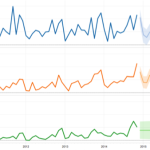
You’re trying to find out how many orders included a piece of living room furniture 5 years ago, 4 years ago, 3 years ago, and so on. Can you spot an upward or downward trend? When does it occur?
3. Consider customer segments
Look at which customer segments were purchasing the most living room items, and in which years. Are you noticing any patterns in people’s buying habits?
4. Look at downward and upward trends
Let’s say that in looking at purchase trends across your customer segments, you notice that living room furniture purchases went down, and bedding purchases increased.
At this point, you know a lot. You know that certain customers stopped buying living room furniture, and started to buy bedding.
Next, ask yourself:
- When did the trend start to shift downward?
- Who was buying in year 4 that wasn’t buying in year 5?
- Does this trend apply to all customers, or only certain segments?
5. Look for patterns
Look for patterns and trends in the data. You’ll discover which customers are responsible for growth, what they’re buying, and what they’re likely to buy next.
If you notice that 44 year-old single moms stopped buying living room furniture and started buying bedding, you can compare similar purchases from the past to see what they’re likely to buy next.
6. Share Findings with Your Team
Once a discernible trend is identified, share it with your team. Collective insights empower strategic decision-making for future marketing campaigns.
Conclusion: Successfully identifying and tracking customer buying patterns is an ongoing process. By employing the right tools, asking pertinent questions, considering customer segments, and analyzing trends, you equip yourself to make informed decisions. Continuously refine your understanding of customer behavior, share insights with your team, and integrate these findings into your marketing strategies for sustained success.
Food for Thought: Sundried Tomato Pesto
:max_bytes(150000):strip_icc():format(webp)/800396-c3457d08d3e24c0cb20a991eaa2fac73.jpg)
I miss red ripe luscious tomatoes in the winter in Chicago. If I absolutely cannot stand it, I’ll buy a hothouse tomato in the winter to use in a recipe. However, I’ve found sundried tomatoes to be an excellent alternative during the winter.
When it comes to tomatoes and marketing campaigns, timing is everything. In the same way that the season can predict whether or not I’ll buy fresh tomatoes, time sensitive predictors can be used to forecast how your customers’ buying habits will change over time. Moving beyond who and what, and including when and why customers are likely to buy, will greatly improve your marketing communications.
In addition to using sundried tomatoes, I’m also discovering that you can make pesto out of ANYTHING! Here is a recipe for Sundried tomato pesto that goes into warm freshly cooked penne pasta with ease. Give it a try for a healthy twist on pasta dishes that usually contain creamy sauces. This recipe will make your brains fall out!
Need help answering these three crucial marketing questions before you launch your next marketing campaign? Contact Bonnie at (312) 463-1050 or by emailing us through our form.

Bonnie Massa
Bonnie Massa is Founder and President of Chicago-based Massa & Company, Inc. She works with companies and nonprofits to make the best use of their information about customers, partners, donors and sponsors. With more than 40 years of experience in marketing and predictive analytics, Bonnie is passionate about helping clients make informed, data-driven decisions to increase the value of their customer base. She strongly believes that making pasta and ice cream from scratch are worth the effort, and she spends much of her free time testing and re-testing that theory.